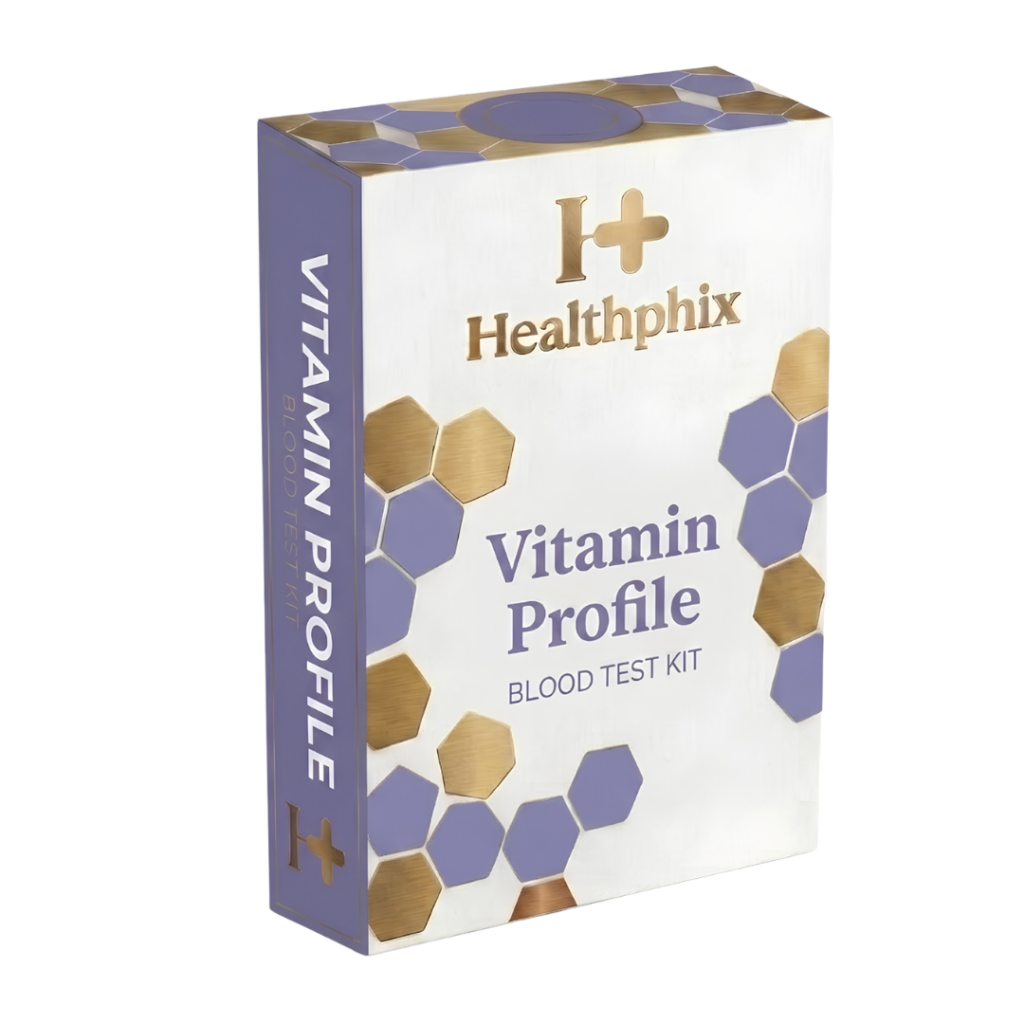
Vitamins (3 Health Indicators)
This profile measures three essential vitamins that contribute to healthy blood production, energy metabolism, immune function, nervous system health, and overall wellbeing.
Folate (Vitamin B9)
Folate is required for healthy cell division, DNA synthesis, and the production of red blood cells. It is particularly important during pregnancy, supporting healthy fetal development and reducing the risk of neural tube defects.
Low folate levels may contribute to:
- Fatigue and weakness
- Anaemia
- Poor concentration
- Reduced red blood cell production
- Nutritional deficiencies
Measuring folate levels helps identify deficiencies, monitor supplementation, and assess nutritional health.
Vitamin B12
Vitamin B12 supports healthy nerve function, red blood cell production, DNA synthesis, and energy metabolism. Because it is mainly found in animal-based foods, deficiency is more common among people following vegetarian or vegan diets.
Low Vitamin B12 levels may be associated with:
- Fatigue
- Weakness
- Anaemia
- Numbness or tingling sensations
- Memory or concentration difficulties
Testing helps identify deficiency and determine whether further assessment or treatment may be beneficial.
Vitamin D (25-OH)
Vitamin D is essential for calcium absorption, healthy bones, muscle function, and immune system support. In countries with limited sunlight exposure, Vitamin D deficiency is particularly common.
Low Vitamin D levels may contribute to:
- Muscle weakness
- Bone pain
- Fatigue
- Reduced immune function
- Increased risk of bone disorders
This test measures Vitamin D (25-Hydroxy Vitamin D), the most reliable marker for assessing your body’s Vitamin D stores and identifying deficiency.